

Reviewed · TRINIDAD TOURS
Live Steel Drums & Street Food Experience!
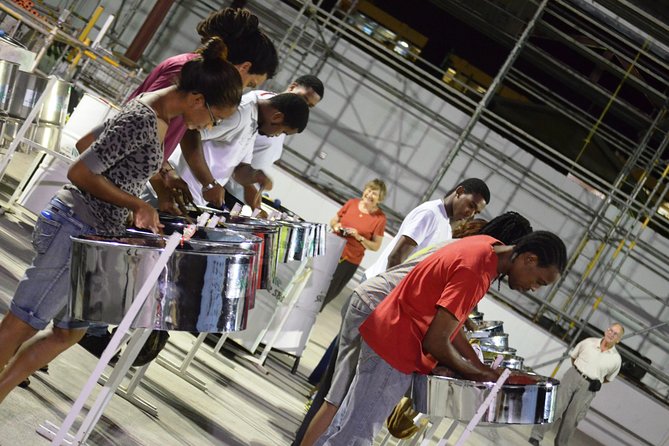
Trinidad’s steelpan music is not a polished stage show here. You visit working panyards, where bands practice in their own neighborhoods, sometimes with 20 or more players and, near Carnival, far larger groups. You hear the sound up close, then stop for doubles, roti, fried fish, barbecue, or another local bite.
I like the small-group feel and the fact that your guide may adjust the evening to find bands actually rehearsing that night. I also like the practical setup: hotel pickup, a private vehicle or air-conditioned minivan, bottled water, and one drink are included. The main consideration is that the route depends on which panyards are active, so some searching and changing plans may be part of the night.
Key points to know before booking
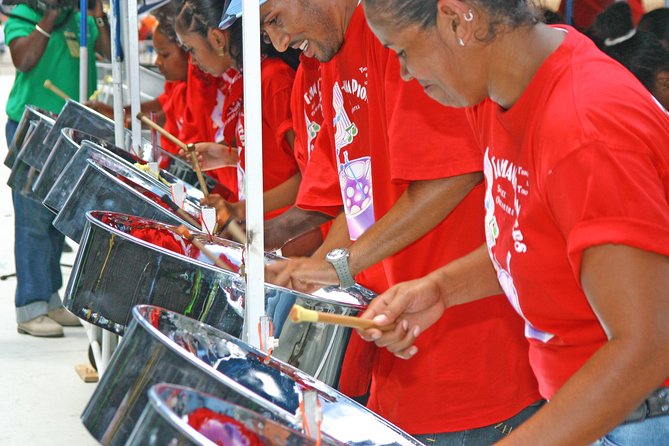
- Several panyards may be visited: Guides have taken participants to as many as four practicing bands in one evening.
- Steelpan is heard in its real setting: You visit neighborhood practice yards rather than simply watching a concert.
- Street food is part of the experience: One doubles or another available specialty is included, with choices such as roti, corn soup, fried fish, barbecue, or Caribbean gyros.
- Hotel pickup makes the late start easy: The tour begins around 8:30 p.m. and includes round-trip transport.
- The guide shapes the evening: Nick Ackrill has been praised for his passion for Trinidadian culture, while other guides have been flexible about the route.
- Solo visitors should check the price: One participant reported being charged for two places when booking alone.
Why Trinidad’s steelpan sounds best in a panyard
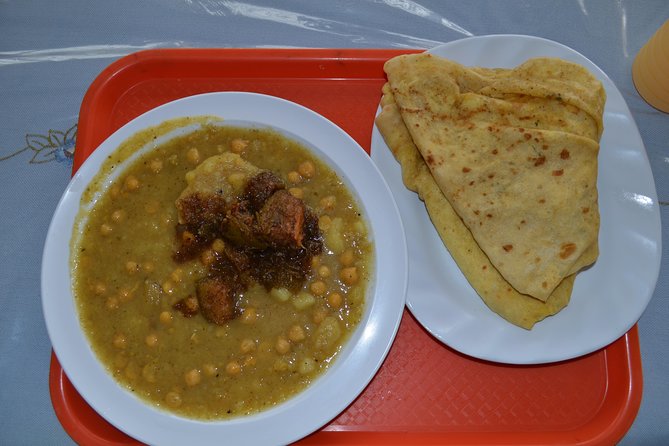
The steelpan was created in Trinidad from discarded oil drums more than 75 years ago. That origin story matters, but the better reason to visit a panyard is simple: you see the instrument as part of daily community life, not as a museum object.
A steel band can play calypso, soca, and many other kinds of music. During the regular season, you might hear more than 20 musicians practicing together. As Carnival approaches, a band can grow to 120 players or more, filling the yard with a wall of bright, ringing sound.
The visit usually begins with hotel pickup and a short drive toward Port of Spain or Woodbrook. During the ride, your guide explains how the pan developed and why it became so closely tied to Trinidad’s Carnival culture. This short introduction helps you listen for the different tones and roles within the band instead of hearing only a mass of percussion.
The setting is part of the appeal. A panyard is a neighborhood practice space, so the experience can feel informal and immediate. You are not guaranteed a formal performance, assigned seats, or a fixed concert program. You may arrive while musicians are warming up, working through a passage, or repeating a section until it is right.
That unpredictability is both the charm and the catch. If one group is not practicing, your guide may need to search for another active yard. That has happened during the tour, but it also led to visits to four different groups in one evening. I would prefer a little searching to being taken to a silent yard and told to imagine the music.
More street food walks:
- Street Food and a Taste of Trinidad Night life
★ 4.0 · 9 reviews - Night Street Food Tasting Tour in Trinidad
★ 4.5 · 6 reviews - Deep Sea Fishing (Street Food and Beer Included)
★ 5.0 · 5 reviews
The Queen’s Park Savannah stop and the evening route
The Queen’s Park Savannah area serves as the main reference point for the evening, though the exact panyard locations can change. The supplied schedule describes an initial short stop, followed by roughly an hour and a half connected with the steelpan portion, but the total tour normally lasts about 2.5 to 3 hours.
You should treat the schedule as a framework rather than a minute-by-minute promise. The guide’s job is to find music happening that night, explain what you are hearing, and keep the route practical. A flexible plan is especially useful during periods when bands are preparing for Carnival.
The route may include Port of Spain and Woodbrook. Those areas give you a look at the city after dark, and the drive between stops lets your guide add context about the island, Carnival, and the pan. Since the tour is short, you will not get an exhaustive city tour. Instead, you get a focused evening built around one important part of Trinidadian culture.
I like this format for a first night in Trinidad. You do not have to arrange separate taxis, locate a panyard on your own, or guess which band is rehearsing. Hotel pickup also matters because the tour begins at about 8:30 p.m. and runs late enough that returning to an unfamiliar area by yourself may be inconvenient.
The operator describes the outing as a small-group or private tour, but the maximum listed capacity is 100 people. That is a much larger number than most people would associate with personal service, so I would confirm the expected group size when booking. The strongest part of the experience depends on being able to hear the music and speak with your guide, and a truly small group would make that easier.
Hearing several bands instead of one staged show
The best outcome is not simply hearing steel drums once. It is seeing how different bands work and how the sound changes from one yard to another.
One evening included four panyards, after the guide spent time locating groups that were practicing. That kind of route gives you a better sense of the steelpan as a living musical tradition. You may notice different band sizes, different arrangements, and varied approaches to calypso or soca.
The experience also gives you a useful contrast with a ticketed performance. At a formal show, the music is presented for an audience. In a panyard, the musicians are rehearsing in their own space. You are watching preparation, repetition, and community participation. That may feel less polished, but it is likely to feel more connected to how the music is made.
Your guide is important here. A good guide can explain what you are hearing without turning the night into a lecture. The strongest feedback points to flexibility, warmth, and a clear interest in Trinidadian culture. Nick Ackrill is specifically praised for his passion for the country, its music, and its Carnival traditions. Another guide was praised for working hard to provide the best experience and changing the plan when needed.
I would ask questions as you go. Find out how the band is organized, how the instruments are made, and how practice changes during Carnival season. The tour is only a few hours, so a curious conversation can add as much value as the drive between yards.
Street food at Queen’s Park Savannah
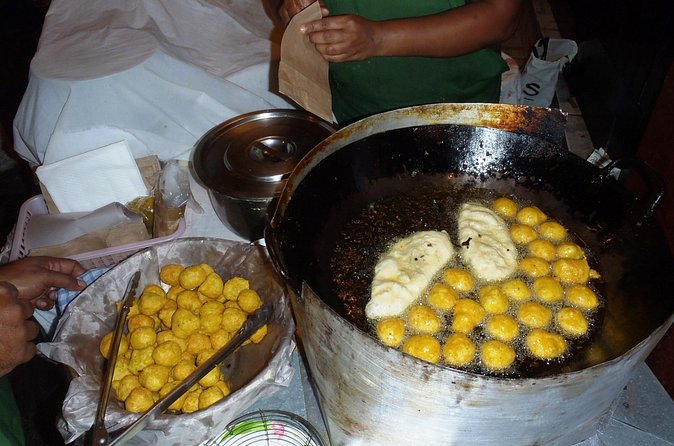
After the music, the focus shifts to food. This is not a full dinner with a long menu. It is a chance to try a local specialty from a street-food setting, with one doubles or another item included according to availability.
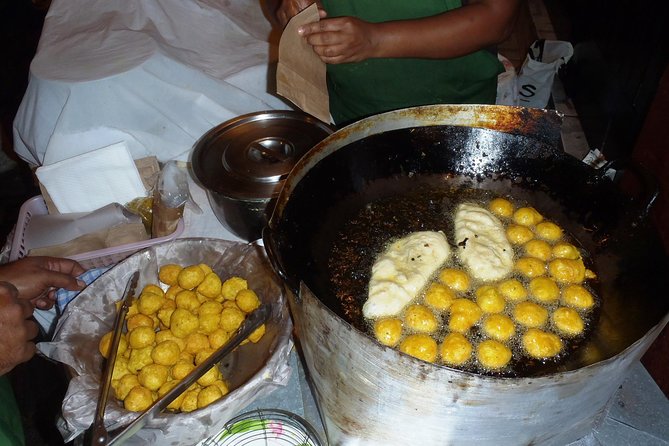
Doubles are the clearest introduction. They are made with fried bara and channa, or curried chickpeas, and usually come with sauces and toppings. If you have never tried one, this is an easy place to start because the guide can help you understand what you are ordering.
The available choices may also include roti, corn soup, whole fried fish, barbecue, or a Caribbean-style gyro. The exact selection depends on what is available and what suits your taste. This variety reflects Trinidad’s mixed food culture, and it gives you more room than a fixed tasting menu.
You also receive one drink. The included options are bottled water, a soft drink, or one alcoholic drink such as beer or rum. Coconut water may also be available as a local choice. Additional alcohol is not included, so bring money if you want more than the one provided drink.
The 45-minute food stop should be enough for a casual meal and conversation, though you should not expect a long restaurant dinner. The strength of this part is the connection between food and the evening’s cultural focus. After hearing calypso and soca, you are eating the kind of quick local food that fits a night out in Port of Spain.
If you have dietary restrictions, ask before booking. The information provided does not list vegetarian, vegan, allergy, or gluten-free arrangements. Since the food depends on availability, you should not assume that every choice will be offered on your date.
A few more Trinidad half-days to weigh up
- Trinidad Nighttime Food Tour
★ 5.0 · 123 reviews - Trinidad Highlights and Scenic Drive Tour
★ 4.5 · 68 reviews - Trinidad Highlights Tour from Port of Spain
★ 4.5 · 61 reviews - Mini Island Tour of Trinidad
★ 4.5 · 47 reviews
Staying out for nightlife or heading back to your hotel
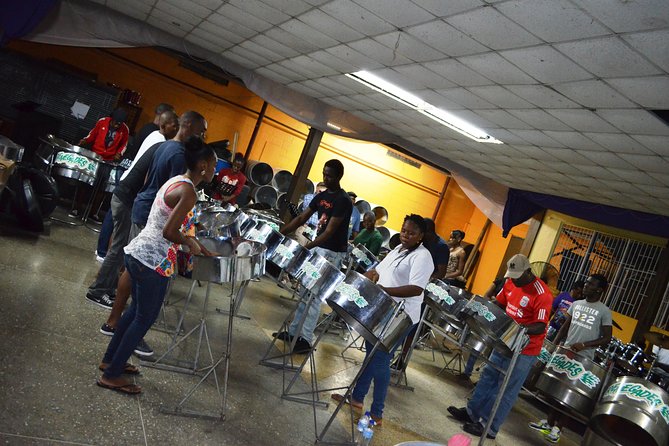
Once the steelpan and food portions are finished, you can return to your hotel. You may also continue into an area known for nightlife, depending on the plan and your preference.
That choice gives the evening a useful bit of flexibility. I would choose the hotel return if I wanted a compact cultural outing or had an early start the next day. I would consider continuing out if I wanted to see more of Port of Spain at night and had the energy for a later evening.
The experience is not marketed as a full nightlife tour, so you should not book it expecting a detailed circuit of bars or clubs. The nightlife option is an extension of the evening, not the main event. The core experience remains the panyards, the music, the food, and the guide’s interpretation.
The transport is by private vehicle or air-conditioned minivan. Round-trip hotel pickup and drop-off are included, which removes one of the biggest practical hassles of a late city tour. Pickup details should be clear at confirmation, but the start time is listed as 8:30 p.m.
What the $75 price includes
At $75 per person, the value depends on how much you would otherwise pay for transport, a private guide, music, and food separately. The package includes hotel pickup and drop-off, a local driver-guide, transport, the steelpan visits, bottled water or a soft drink, one beer or rum if you choose it, and one doubles or other street-food item.
That is a fair bundle for a short evening, particularly if you are staying outside the immediate panyard areas. You are paying for access and local coordination as much as for the food itself. Finding several bands that are practicing on the same night would be difficult without local help.
The price is less attractive if you are traveling alone and are charged for two places. One solo participant raised this concern, saying the tour required payment for two despite having only one person. That may not apply to every booking, but it is worth confirming the solo rate before you pay.
The small-group label is another point to clarify. The listed maximum is 100 people, although the experience is also described as private or small-group. Ask how many people are expected on your date. A smaller group will make the guide’s explanations and the panyard visits more comfortable.
The tour is usually booked about 31 days ahead. That suggests you should not wait until the last minute if your dates are fixed, especially during a busy Carnival period. Confirmation is provided at booking, and free cancellation is available if you cancel at least 24 hours before the start time.
Who will enjoy this evening most
I would choose this tour if you want music, food, and local context in one compact outing. It suits first-time visitors who want help navigating Port of Spain at night, as well as returning visitors who want something more specific than a standard city drive.
Families can take part if children are over 7 years old. The operator describes the tour as family-friendly and says the plan can be adjusted for families with children. Since the start time is late, you should still consider your child’s bedtime and tolerance for a 2.5 to 3-hour evening.
Music lovers will get the most from the panyard visits, especially if they enjoy seeing rehearsal rather than only a finished show. The food portion also helps if you want to try doubles but would not know where to begin on your own.
This may not suit you if you need a fixed schedule, guaranteed access to one specific band, or a formal concert setting. The guide may spend time searching for active panyards, and the food selection can change. You should also be comfortable with a late start and the possibility of a flexible route.
My take on the guides and personal service

The guide can make or break an outing built around changing locations. The available feedback points to guides who are flexible and engaged, with special praise for Nick Ackrill and for a female guide whose name was not recorded by the participant.
Those comments line up with what this tour needs. The guide must know where to look, explain the steelpan without overcomplicating it, keep the vehicle moving, and adapt when a band is not practicing. A fixed script would be less useful than local judgment here.
I also like that the guide is described as a local driver-guide. You are not simply transferred from hotel to food stop. The drive is part of the learning, with time to hear about the island, the pan, and Carnival.
The rating is 4.9 from nine ratings, which is a very strong result but still a small sample. I would treat it as encouraging evidence, not a promise that every evening will follow the same route. The number of active bands, the group size, and the guide assigned to your date can all affect the experience.
Should you book Live Steel Drums and Street Food?
Book it if you want to hear Trinidad’s steelpan in the community spaces where bands practice, not just from a stage. The combination of several possible panyards, a local guide, hotel transport, and a doubles tasting gives you a useful, well-shaped night for $75.
I would confirm two things before booking: the expected group size and the price for a solo participant. You should also accept that the route can change and that a little searching may be needed to find active bands.
For families with children over 7, first-time visitors, and anyone curious about Carnival music, this is a strong choice. If you want a guaranteed concert, a quiet dinner, or a tightly timed itinerary, choose something more structured.
FAQ
Where does the steelpan experience take place?
The panyard locations vary, but they can include areas of Port of Spain and Woodbrook. Queen’s Park Savannah is listed as the main stop area.
What time does the tour start?
The tour starts at 8:30 p.m.
How long does the experience last?
The evening lasts approximately 2.5 to 3 hours.
Is hotel pickup included?
Yes. Hotel pickup and drop-off are included, with transport by private vehicle or air-conditioned minivan.
What food is included?
One doubles or another street-food item is included, depending on availability. Choices may include roti, corn soup, whole fried fish, barbecue, or a Caribbean-style gyro.
Is a drink included?
Yes. One bottled water, soft drink, beer, or rum is included. Extra alcoholic drinks are available to purchase.
Can children join the tour?
Children over 7 years old can participate. The experience can be adjusted for families with children.
Can I cancel for a full refund?
Yes, if you cancel at least 24 hours before the experience start time. Cancellations or changes made less than 24 hours before the start time are not accepted for a refund.
More Food & Drink in Trinidad
- Island Tour (Food and Drinks include)
★ 4.5 · 7 reviews
More Dining Experiences in Trinidad
- Trinidad Mud Volcano Hike and Food Experience
★ 4.5 · 13 reviews
Just added around Trinidad
- Trinidad Nature and Asa Wright Center Full-Day Tour from Port of Spain★ 5.0 · 3 reviews
- Airport Transfer to OR from Accommodation in Trinidad★ 5.0 · 3 reviews
- Half-day 3-Course Cocoa Lunch Tour in Trinidad★ 4.5 · 4 reviews
- Steel Pan Class★ 4.0 · 5 reviews
- Paria Waterfall★ 5.0 · 5 reviews
- Trinidad: Avocat Waterfall and Maracas Bay Beach Tour★ 5.0 · 5 reviews
- Trinidad: Rainforest Hike to Avocat Waterfall★ 4.7 · 5 reviews
- Aripo Waterfall Adventure★ 4.5 · 5 reviews
Trinidad Tours, compared.





Browse the lists this tour appears in